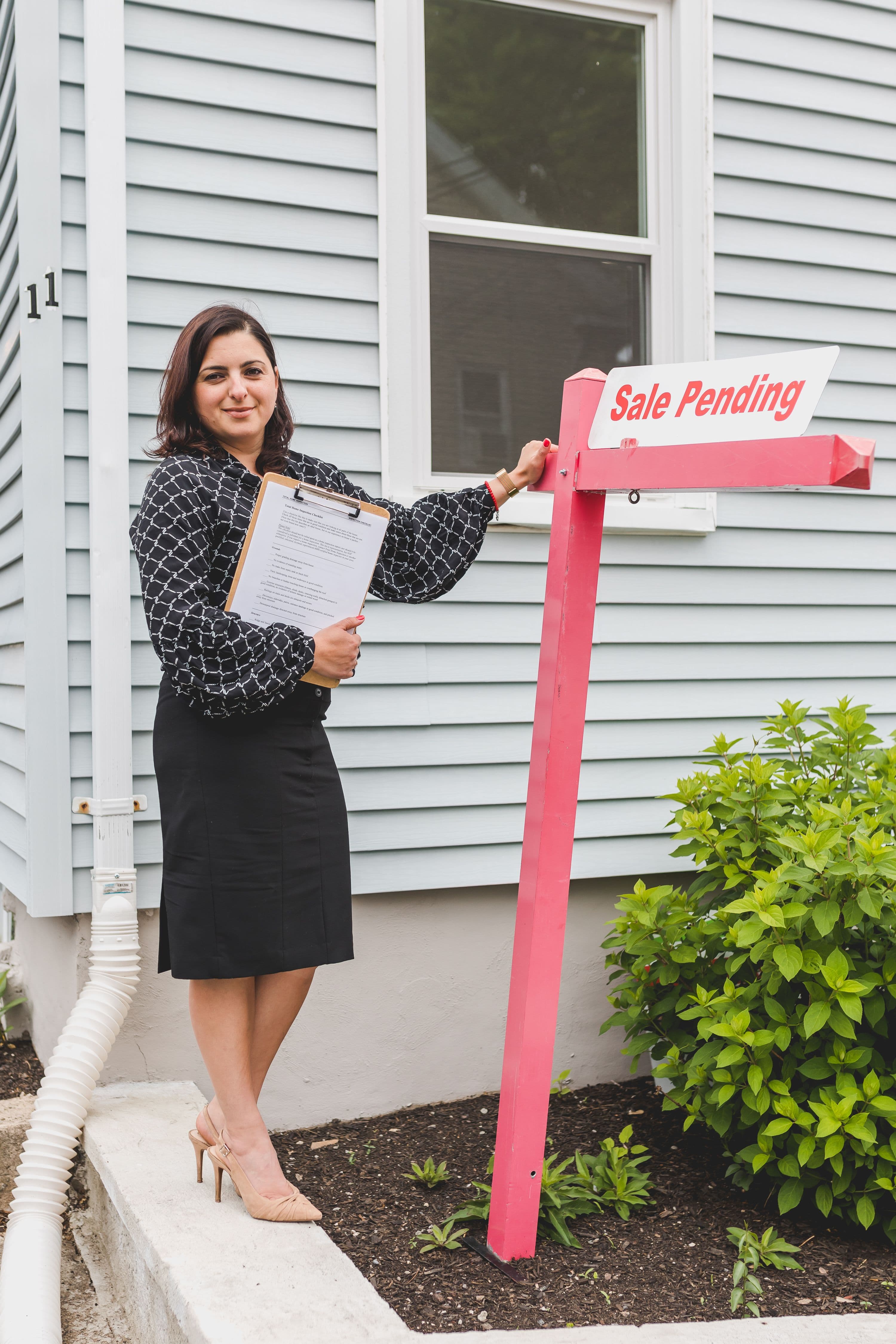
Section 8 Investing Realtor Philadelphia

Investor friendly REALTOR helping Philadelphia investors buy and run Section 8 rentals, from payment standards and PHA inspections to the blocks where vouchers pencil.

Guaranteed rent is only guaranteed if you understand the program. I help investors find properties that pass inspection, price to the payment standard, and cash flow with voucher tenants.

Call or Email Nicholas Davis

Nicholas Davis, Section 8 investment property real estate agent in Philadelphia

Trusted by buyers, sellers, and investors with experience built in the field

  • In Team Sales

    $500M+

    Total Sales Volume
  • Buyers & Sellers Helped

    1000+

    Clients Served to Date
  • Philadelphia Metro

    650+

    Total Transactions
  • Combined Team Experience

    22+

    Combined Years of Experience

Reliable Rent, If You Buy the Right Property

Section 8, formally the Housing Choice Voucher program run by the Philadelphia Housing Authority, pays a large share of a qualified tenant's rent directly to the landlord every month. For investors that can mean dependable income and lower collection risk, especially in cash flow neighborhoods. It also means a property that must pass PHA inspection, rent that cannot exceed the payment standard for its zip code and bedroom count, and a process that rewards landlords who understand it. I help you find buildings that will pass, price units to the standard, and underwrite the real cash flow.

Voucher Math

How Section 8 rent is set and what it means for returns

The payment standard caps your rent. The expense ratio and cash on cash return tell you whether the property still works at that cap.

Fair Market Rent (FMR)

The rent ceiling for Section 8 vouchers

Fair market rent is the rent level HUD publishes each year for a metro area by bedroom count, and housing authorities use it to set the payment standards that cap how much a Housing Choice Voucher will pay. In Philadelphia, payment standards vary by zip code, so the same unit can qualify for very different voucher rents depending on the block.

Example: If the payment standard for a two bedroom in a given Philadelphia zip code is $1,600, a landlord asking $1,800 will either need to drop the rent or the tenant must qualify to cover the gap within program limits.

Net Operating Income (NOI)

What the property earns before the mortgage

Net Operating Income is the annual income a rental property produces after vacancy and all operating expenses are subtracted, but before debt service and income taxes, making it the cleanest way to compare how two properties actually perform.

Formula
NOI = Gross Rental Income − Vacancy − Operating Expenses
Gross Rental Income
All rent and fees collected over twelve months
Vacancy
Expected lost rent between tenants, often 5 to 8 percent
Operating Expenses
Taxes, insurance, water, maintenance, management, turnover, reserves

Example: $24,000 in rent, minus $1,440 vacancy, minus $8,500 in expenses leaves an NOI of $14,060.

Operating Expense Ratio

How much of the rent never reaches you

The operating expense ratio is the share of gross rental income consumed by operating costs such as taxes, insurance, water, maintenance, turnover, management, and vacancy. On older Philadelphia multifamily buildings a realistic ratio is 40 to 50 percent, far higher than the optimistic numbers in most listing pro formas.

Formula
Expense Ratio = Operating Expenses ÷ Gross Rental Income × 100
Operating Expenses
All costs to run the building, excluding the mortgage
Gross Rental Income
Total market rent from all units over twelve months

Example: A duplex collecting $36,000 a year with $16,200 in operating costs runs a 45 percent expense ratio, leaving $19,800 of NOI.

Cash on Cash Return

Return on the actual cash you put in

Cash on cash return is the annual pre tax cash flow a property produces divided by the total cash you invested, including down payment, closing costs, and renovation. It shows how hard your own money is working after financing.

Formula
Cash on Cash = Annual Cash Flow ÷ Total Cash Invested × 100
Annual Cash Flow
NOI minus annual mortgage payments
Total Cash Invested
Down payment plus closing costs plus rehab plus reserves

Example: $4,800 in yearly cash flow on $60,000 invested is an 8.0 percent cash on cash return.

Section 8 Investing

Let's Talk Section 8 Investing in Philadelphia

Send me the deal, the neighborhood, or the question you are working through. I answer my phone, and I will tell you plainly whether the numbers work.

Meet Nicholas
Process

How We Help You Invest in Philadelphia

A disciplined investing process for Philadelphia — from deal sourcing and underwriting to execution and exit planning.

  1. 01

    Search Philadelphia On-Market and Distress Properties Using Compass One

    Identify on-market opportunities in Philadelphia through Compass One that match your strategy, timeline, and target returns.

    Compass One
  2. 02

    Run 70% Rule And/Or DSCR Analysis

    Underwrite each deal with the right framework for your strategy, including 70% rule for flips and DSCR analysis for rentals.

  3. 03

    Validate Comps And Build Budget

    Confirm after-repair value and create a realistic project budget covering renovation scope, holding costs, reserves, and exit costs.

  4. 04

    Structure Offer And Terms

    Prepare a disciplined offer with contingencies, timelines, and pricing terms that protect your downside while staying competitive in Philadelphia.

  5. 05

    Complete Due Diligence And Financing

    Coordinate inspections, contractor walk-throughs, lender requirements, and title review so your numbers hold through closing.

  6. 06

    Execute Renovation Or Lease-Up Plan

    Move from closing to execution with a clear operating plan for rehab, leasing, refinance, or resale based on your investment objective.

About Me

Built by Real Experience

More than 10 years in real estate investing, property operations, and construction execution now power every client strategy.

Philadelphia Real Estate Realtor, Investor, and Licensed General Contractor at

Compass
Nicholas Davis with Jett

Nicholas Davis brings more than 10 years of hands on real estate experience across investing, property management operations, renovation planning, and project execution. Long before becoming a licensed real estate agent, he was already evaluating deals, managing risk, and protecting margins in the field.

That operating background gives clients an advantage at every stage. You get practical guidance on pricing, renovation scope, hold costs, rental upside, negotiation structure, and timeline decisions, all grounded in real world execution.

Today, as a full time Philadelphia real estate agent and licensed general contractor, Nicholas helps buyers, sellers, and investors make stronger decisions with clarity and confidence. No pressure. No fluff. Just direct advice and disciplined strategy focused on results.

Real Estate Guides for Philadelphia

Practical real estate guides for buyers, sellers, and investors, focused on decisions that matter most in your market.

Section 8 Faq

Section 8 questions Philadelphia investors ask

Straight answers on how the voucher program works in Philadelphia, inspections, payment standards, tenant screening, and which properties make sense.

  1. How does Section 8 work for a landlord in Philadelphia?

    +×

    A tenant with a Housing Choice Voucher finds your unit, you agree on rent within the payment standard, the Philadelphia Housing Authority inspects the unit, and once it passes you sign a lease with the tenant and a housing assistance payment contract with PHA. PHA then pays its share directly to you each month and the tenant pays the balance, typically around 30 percent of their income. Annual inspections and rent adjustments follow.

  2. How much rent can I charge a Section 8 tenant?

    +×

    Up to the payment standard PHA sets for the unit's bedroom count and zip code, subject to a rent reasonableness test against comparable unassisted units nearby. Philadelphia uses payment standards that vary by zip code, so a two bedroom in one area may be capped hundreds of dollars higher than the same unit elsewhere. I pull the current standards for the blocks you are considering so you can underwrite to the real ceiling.

  3. What does the PHA inspection require?

    +×

    The unit has to meet HUD housing quality standards: working heat, plumbing, and electrical, no peeling paint in pre 1978 buildings, functioning smoke and carbon monoxide detectors, secure doors and windows, no serious structural or safety issues, and clean, sanitary conditions. Older Philadelphia rowhomes often fail on paint, windows, handrails, and electrical. As a contractor I walk properties for inspection readiness before you buy and tell you what it will take to pass. Common inspection pitfalls I look for.

  4. Is Section 8 a good investment strategy in Philadelphia?

    +×

    It can be, particularly in neighborhoods like Kensington, Frankford, and parts of North and West Philadelphia where payment standards are competitive with or above market rent and tenant demand is deep. The income is dependable and vacancy is often lower. The tradeoffs are inspection compliance, a slower initial lease up, and more process. It is not a fit for every investor or every block, which is exactly what we sort out before you buy. Best Philadelphia neighborhoods for rentals.

  5. Can I screen Section 8 tenants?

    +×

    Yes. The voucher qualifies the tenant for assistance, not for your unit. You can and should apply the same screening you use for any applicant, consistently and within fair housing law: rental history, references, and background. Philadelphia prohibits discriminating against applicants based on their source of income, so you cannot refuse a tenant because they have a voucher, but you can hold every applicant to the same reasonable standards.

  6. Do I still need a Philadelphia rental license?

    +×

    Yes. PHA participation does not replace city requirements. You need a rental license, a certificate of rental suitability for the tenant, and lead safe certification for most older units before the lease starts. I build those requirements and their timeline into the purchase so the unit is leasable the day it passes inspection. How to get your Philadelphia rental license.

  7. How do I start investing in Section 8 rentals with you?

    +×

    Share your budget, financing, and target neighborhoods. I will pull the payment standards, identify properties that can pass inspection with reasonable work, and underwrite the cash flow at the voucher rent so you know exactly what the program will and will not do for the deal. Talk Section 8 investing with me.

Contact

Book Your Consultation

Tell me a little about your goals and I will reach out to discuss your next move in the market.

Nicholas Davis

Nicholas Davis

Currently Online

What you can expect:

  • Tailored strategy for buying or selling
  • Neighborhood-level market guidance
  • Seamless communication from start to close
  • Disciplined execution that protects your position

Contact form

Affiliations and Tools I Work With

  • Compass logo
  • Redfin logo
  • MLS Realtor logo
  • Google Workspace logo
  • DocuSign logo
  • ChatGPT logo