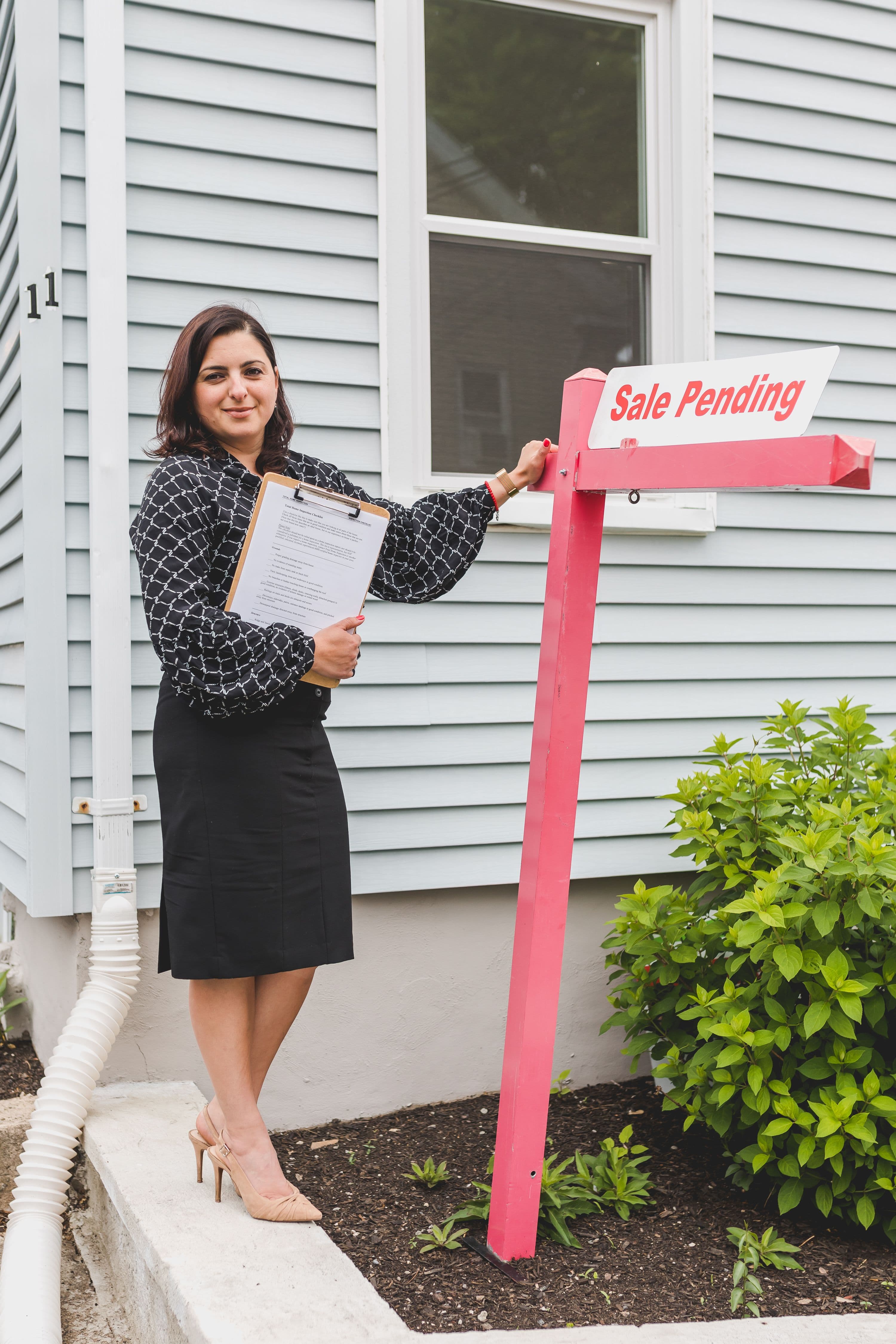
1031 Exchange Realtor in Philadelphia

Investor friendly REALTOR helping Philadelphia investors sell a rental and defer capital gains with a 1031 exchange, from timing the sale to finding replacement property.

Forty five days to identify, one hundred eighty to close. I help you sell well, source replacement property that fits the deadlines, and avoid the mistakes that make an exchange taxable.

Call or Email Nicholas Davis

Nicholas Davis, 1031 exchange real estate agent in Philadelphia

Trusted by buyers, sellers, and investors with experience built in the field

  • In Team Sales

    $500M+

    Total Sales Volume
  • Buyers & Sellers Helped

    1000+

    Clients Served to Date
  • Philadelphia Metro

    650+

    Total Transactions
  • Combined Team Experience

    22+

    Combined Years of Experience

Trade Up Without Writing a Check to the IRS

A 1031 exchange lets you sell an investment property and roll the full proceeds into a bigger or better one while deferring federal and Pennsylvania capital gains tax. The rules are strict: a qualified intermediary must hold the funds, you have 45 days from closing to identify replacement property in writing, and 180 days to close. In a market like Philadelphia where the right building is not always available on your schedule, the exchange is won or lost on preparation. I help you time the sale, line up replacement candidates before you close, and keep every step inside the deadlines.

Exchange Math

What a 1031 exchange defers and what the replacement must earn

The deferral is only worth it if the replacement property performs. These are the numbers I use to compare what you are selling with what you are buying.

1031 Exchange

Defer capital gains tax by trading up

A 1031 exchange lets an investor sell an investment property and reinvest the proceeds into another investment property of equal or greater value without paying capital gains tax at the time of sale. The tax is deferred, not forgiven, and the IRS imposes strict identification and closing deadlines that make planning before the sale essential.

How it works
  1. Engage a qualified intermediary before closing on the sale so you never touch the proceeds
  2. Sell the relinquished property and let the intermediary hold the funds
  3. Identify up to three replacement properties in writing within 45 days
  4. Close on the replacement property within 180 days of the sale
  5. Reinvest all proceeds and replace the debt to avoid taxable boot

Example: Selling a $400,000 rental with $150,000 of gain and buying a $500,000 triplex through an exchange defers roughly $30,000 to $40,000 in combined federal and state tax that would otherwise be due.

Capitalization Rate (Cap Rate)

Unlevered return on the purchase price

Cap rate is the ratio of a property's net operating income to its purchase price, expressed as a percentage. It measures the return you would earn with no mortgage, which makes it useful for comparing properties regardless of financing.

Formula
Cap Rate = NOI ÷ Purchase Price × 100
NOI
Net Operating Income
Purchase Price
Total acquisition cost, or current market value for an owned asset

Example: An NOI of $14,060 on a $200,000 purchase is a 7.0 percent cap rate.

Net Operating Income (NOI)

What the property earns before the mortgage

Net Operating Income is the annual income a rental property produces after vacancy and all operating expenses are subtracted, but before debt service and income taxes, making it the cleanest way to compare how two properties actually perform.

Formula
NOI = Gross Rental Income − Vacancy − Operating Expenses
Gross Rental Income
All rent and fees collected over twelve months
Vacancy
Expected lost rent between tenants, often 5 to 8 percent
Operating Expenses
Taxes, insurance, water, maintenance, management, turnover, reserves

Example: $24,000 in rent, minus $1,440 vacancy, minus $8,500 in expenses leaves an NOI of $14,060.

Buy and Hold

Own for income and appreciation over a long horizon

Buy and hold is a strategy of purchasing rental property and keeping it for years or decades, earning monthly cash flow while tenants pay down the mortgage and the neighborhood appreciates. Returns come from four sources at once: cash flow, principal paydown, appreciation, and tax benefits, which is why patient investors favor it.

Example: A $220,000 Philadelphia rowhome bought today and held ten years at 3 percent appreciation with a tenant paying down the loan can build well over $100,000 in equity before counting cash flow.

1031 Exchange

Let's Talk 1031 Exchange in Philadelphia

Send me the deal, the neighborhood, or the question you are working through. I answer my phone, and I will tell you plainly whether the numbers work.

Meet Nicholas
Process

How We Help You Invest in Philadelphia

A disciplined investing process for Philadelphia — from deal sourcing and underwriting to execution and exit planning.

  1. 01

    Search Philadelphia On-Market and Distress Properties Using Compass One

    Identify on-market opportunities in Philadelphia through Compass One that match your strategy, timeline, and target returns.

    Compass One
  2. 02

    Run 70% Rule And/Or DSCR Analysis

    Underwrite each deal with the right framework for your strategy, including 70% rule for flips and DSCR analysis for rentals.

  3. 03

    Validate Comps And Build Budget

    Confirm after-repair value and create a realistic project budget covering renovation scope, holding costs, reserves, and exit costs.

  4. 04

    Structure Offer And Terms

    Prepare a disciplined offer with contingencies, timelines, and pricing terms that protect your downside while staying competitive in Philadelphia.

  5. 05

    Complete Due Diligence And Financing

    Coordinate inspections, contractor walk-throughs, lender requirements, and title review so your numbers hold through closing.

  6. 06

    Execute Renovation Or Lease-Up Plan

    Move from closing to execution with a clear operating plan for rehab, leasing, refinance, or resale based on your investment objective.

About Me

Built by Real Experience

More than 10 years in real estate investing, property operations, and construction execution now power every client strategy.

Philadelphia Real Estate Realtor, Investor, and Licensed General Contractor at

Compass
Nicholas Davis with Jett

Nicholas Davis brings more than 10 years of hands on real estate experience across investing, property management operations, renovation planning, and project execution. Long before becoming a licensed real estate agent, he was already evaluating deals, managing risk, and protecting margins in the field.

That operating background gives clients an advantage at every stage. You get practical guidance on pricing, renovation scope, hold costs, rental upside, negotiation structure, and timeline decisions, all grounded in real world execution.

Today, as a full time Philadelphia real estate agent and licensed general contractor, Nicholas helps buyers, sellers, and investors make stronger decisions with clarity and confidence. No pressure. No fluff. Just direct advice and disciplined strategy focused on results.

Real Estate Guides for Philadelphia

Practical real estate guides for buyers, sellers, and investors, focused on decisions that matter most in your market.

1031 Faq

1031 exchange questions Philadelphia investors ask

Straight answers on deadlines, qualifying property, boot, intermediaries, and how I help investors execute exchanges in Philadelphia without a taxable surprise.

  1. What is a 1031 exchange?

    +×

    It is a provision of the tax code that lets you sell an investment property and reinvest the proceeds into another investment property without paying capital gains tax at the time of sale. The tax is deferred, not forgiven. Your basis carries into the new property, and if you eventually sell without exchanging, the deferred gain comes due. Many investors exchange repeatedly and ultimately pass the property to heirs at a stepped up basis, which is where the real planning value lives.

  2. What are the deadlines?

    +×

    Two clocks start the day your sale closes. You have 45 calendar days to identify replacement property in writing to your qualified intermediary, and 180 calendar days to close on it. Both run at the same time and neither can be extended except in federally declared disasters. Missing either one makes the entire sale taxable, which is why I start sourcing replacement property before your sale goes under contract.

  3. What property qualifies as like kind?

    +×

    Almost any real estate held for investment or business use in the United States is like kind to any other. You can sell a Philadelphia duplex and buy a mixed use building, land, a triplex in the suburbs, or an interest in a larger property. What does not qualify is your primary residence, property held primarily for resale like a flip, or anything outside the country. The replacement must be equal or greater in value and debt to fully defer the gain. See my multifamily investing services.

  4. What is boot and how do I avoid it?

    +×

    Boot is anything you receive in the exchange that is not like kind property, and it is taxable. The two common forms are cash boot, when you buy a cheaper replacement and pocket the difference, and mortgage boot, when the debt on the new property is lower than the debt you paid off. To fully defer, buy equal or greater value and replace equal or greater debt, or add cash to make up the difference. I model this with your intermediary before you make an offer.

  5. Do I need a qualified intermediary?

    +×

    Yes, and you must engage one before your sale closes. If you touch the proceeds for even a day, the exchange fails. The intermediary holds the funds, receives your identification letter, and wires the money to the replacement closing. I work with intermediaries experienced in Pennsylvania transactions and coordinate the timing between your sale and purchase so the handoffs are clean.

  6. How do you help with the selling side of an exchange?

    +×

    The sale has to close for the right price and on a schedule that gives you room to find replacement property. I price and market the relinquished property to maximize proceeds, negotiate a closing date that aligns with your replacement search, and if needed structure a longer closing or a leaseback to buy time. Selling well is half the exchange. See my seller services.

  7. How do you find replacement property on a deadline?

    +×

    By starting before the sale closes. I build a short list of candidates that fit your value and debt targets, including off market and pre market inventory that is not competing with every other buyer, so the 45 day identification is a choice among real options rather than a scramble. See my off market property services.

  8. How do I start planning an exchange with you?

    +×

    Share the property you are considering selling, your estimated gain, and what you would like to own next. I will walk you through the timeline, connect you with an intermediary and your tax advisor, and start building a replacement list so the 45 day clock is a formality rather than a panic. Plan a 1031 exchange with me.

Contact

Book Your Consultation

Tell me a little about your goals and I will reach out to discuss your next move in the market.

Nicholas Davis

Nicholas Davis

Currently Online

What you can expect:

  • Tailored strategy for buying or selling
  • Neighborhood-level market guidance
  • Seamless communication from start to close
  • Disciplined execution that protects your position

Contact form

Affiliations and Tools I Work With

  • Compass logo
  • Redfin logo
  • MLS Realtor logo
  • Google Workspace logo
  • DocuSign logo
  • ChatGPT logo