Safest Neighborhoods in Philadelphia, What Safety Really Means
Key Takeaways
- For deeper analysis of how safety connects to long-term property value, read Neighborhoods in Philadelphia, How I Help You Choose the Right Area and Best Philadelphia Neighborhoods by Budget, Lifestyle, and Exit Strategy.
- Most neighborhood guides pull crime statistics and rank neighborhoods by numbers.
- This creates obvious problems.
- A neighborhood with high reported crime might have high reporting because there is active police presence and residents report crimes.
- A neighborhood with low reported crime might have low reporting because residents expect crime and do not report it.
Why crime data alone does not tell you if a neighborhood is safe
Most neighborhood guides pull crime statistics and rank neighborhoods by numbers. This creates obvious problems.
A neighborhood with high reported crime might have high reporting because there is active police presence and residents report crimes. A neighborhood with low reported crime might have low reporting because residents expect crime and do not report it. Both show up as "high crime" or "low crime" on a simple chart, but they mean completely different things for your safety.
I separate authentic safety from perception when I evaluate neighborhoods for buyers. That means looking at crime data plus resident stability patterns plus street-level indicators that show whether people actually maintain the community.
For a deeper analysis of reading neighborhood risk across Philadelphia, start with Map of Philadelphia Neighborhoods, How to Read Block by Block Risk Like a Pro and Philadelphia Neighborhood Red Flags, What I Catch as a Realtor and Licensed Contractor.
The neighborhoods with the strongest safety patterns
When I look at crime data across Philadelphia over the last five years, these neighborhoods consistently show lower violent crime and property crime rates:
Northeast Philadelphia neighborhoods
Fox Chase, Bustleton, Northeast Center City, and Rhawnhurst neighborhoods have low reported crime and high police presence. Residents are stable, properties are owner-occupied, and community investment is high. These neighborhoods feel safer at night because they are safer. There is street activity, occupied properties, and visible presence.
The trade-off: they are less walkable, less trendy, and further from Center City. If your job requires daily Center City commute, these neighborhoods are not convenient.
Mount Airy and Chestnut Hill
These neighborhoods have the lowest violent crime rates in Philadelphia. Residents are stable, property investment is strong, and community organizations are active. The tree-lined streets and dense housing mean there is always someone around. Foot traffic is consistent.
The trade-off: property prices are high relative to the rest of the city, and the neighborhoods do not appeal to renters as much as owner-occupants. If you are buying to potentially rent out later, you need to understand that the tenant pool is smaller.
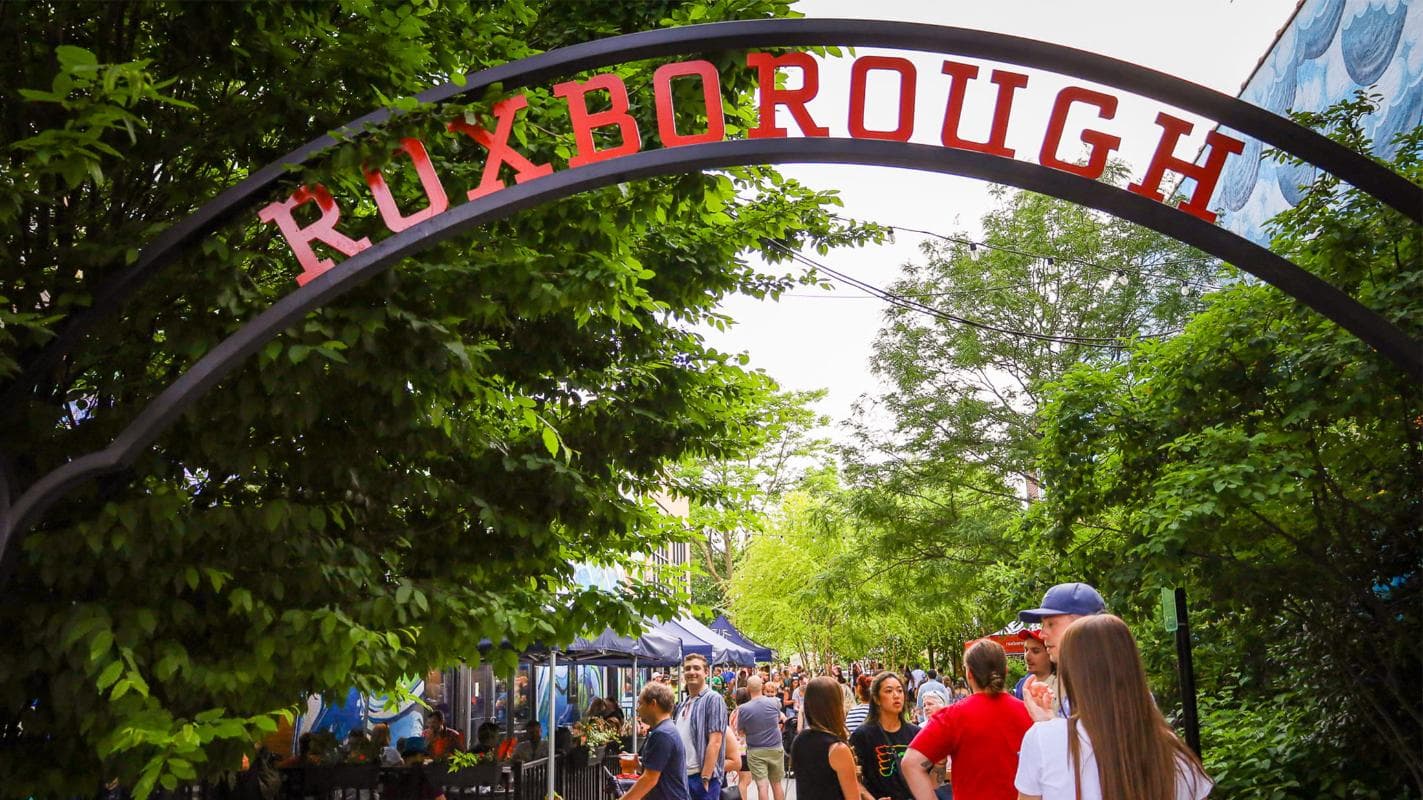
Roxborough
Roxborough has good safety patterns with lower violent crime rates and more affordable prices than Mount Airy or Chestnut Hill. It is further north but still has transit access. Residents are stable and owner-occupied properties dominate.
The trade-off: Roxborough is aging. You need to look carefully at the structural condition of properties because the housing stock is older and mixed in age.
Safety neighborhoods that are appreciating
Here is what buyers often miss: the safest neighborhoods are also neighborhoods with strong buyer demand and good appreciation patterns. That is not coincidence.
For deeper analysis of how safety connects to long-term property value, read Neighborhoods in Philadelphia, How I Help You Choose the Right Area and Best Philadelphia Neighborhoods by Budget, Lifestyle, and Exit Strategy.
Safe neighborhoods attract families, which attracts investment in schools and retail, which drives property appreciation. Unsafe neighborhoods can improve when investment flows in, but they also have higher downside risk if the investment stops.
This matters for your property value because you want to be in a neighborhood where safety creates a positive feedback loop. More safety attracts more stable residents, which maintains safety, which supports property values.
How I evaluate safety on the block level
When I walk a neighborhood to assess safety, I look for these patterns:
Resident stability and owner-occupancy
Neighborhoods where people own their homes and stay have lower crime. Owner-occupants maintain properties, watch the street, and invest in the community. Neighborhoods with high turnover or rental concentration have higher crime because there is less ownership and less incentive to maintain.
I look at property tax records to see what percentage of homes are owner-occupied versus rental. That tells me something about resident stability.
Street-level maintenance and activity
Safe neighborhoods have occupied properties, maintained yards, and visible foot traffic. Unsafe neighborhoods have boarded properties, neglected yards, and empty streets at night.
I walk the block at different times of day to see whether the pattern is consistent. A block that is dead at night is a block where crime can happen without witnesses.
Police presence and response time
Some neighborhoods have visible police presence. Some neighborhoods have rapid response times. These are not the same thing, but they both matter for safety.
I look at reported police response times and visible patrol patterns. That tells me something about how seriously crime is addressed in the neighborhood.
School performance and community investment
Neighborhoods with better schools have more family investment and more community organizations. These neighborhoods tend to have lower crime because there are more eyes on the street and more community engagement.
The neighborhoods I would choose if safety was my priority
If I were buying in Philadelphia and safety was my top concern, I would start with this list:
Strongest overall safety: Mount Airy, Chestnut Hill, Roxborough, Northeast Philadelphia neighborhoods (Fox Chase, Bustleton).
Good safety with more walkability: North Philadelphia (Strawberry Mansion Park area), parts of Fairmount, parts of Francisville.
Good safety with better appreciation: Parts of Graduate Hospital, parts of Point Breeze (southern sections).
But the key point: safety is a variable within neighborhoods, not just between neighborhoods. A block in a "safe" neighborhood can be problematic if it has boarded properties or low investment. A block in a "less safe" neighborhood can be genuinely secure if it has owner investment and active community.
What I look for that changes neighborhood safety assessment
As a licensed contractor, I see something that realtors miss: neighborhoods where property investment is happening are neighborhoods where community is re-stabilizing.
If a block shows active renovation, occupied properties, and visible investment, that block is often becoming safer even if the neighborhood's overall safety reputation is slower to change. I can spot blocks where safety is improving before the broader market catches on.
For a detailed framework to evaluate blocks before you buy, read Before You Buy in Any Philadelphia Neighborhood, My 12 Point Due Diligence Framework and How My Realtor and Licensed Contractor Advantage Saves Buyers and Investors From Expensive Mistakes.
How to evaluate safety in a specific neighborhood
If you are considering a specific Philadelphia neighborhood, here is my evaluation process:
Step 1: check crime data from multiple sources
Do not rely on a single crime map. Use Philadelphia Police Department data, CrimeReports.com, and Citizen to triangulate what is actually happening. Look at trends over time, not just current snapshot.
Step 2: drive and walk the block at different times
Visit the neighborhood in daylight and evening. Look at property conditions, street activity, and whether residents are present and engaged.
Step 3: talk to residents
If you can, knock on doors or talk to people in the neighborhood. Ask what they like and what they worry about. Residents will tell you the real story.
Step 4: look at property values and turnover
Neighborhoods with rising property values and stable ownership are neighborhoods where residents believe in safety. Neighborhoods with declining values and high turnover are neighborhoods with safety concerns or perception problems.
Step 5: commission a professional safety assessment
If you are serious about a property, hire a licensed inspector or real estate professional to give you an honest assessment of the neighborhood and block. That costs a few hundred dollars and will save you thousands in regret.
When to reach out about neighborhood safety
If you are considering Philadelphia neighborhoods but you want a professional assessment of which blocks are genuinely safe and which blocks have safety concerns, or if you want to understand whether improving investment is making a neighborhood safer, this is the time to talk to me.
I can give you an honest read of neighborhood safety based on data and street-level observation, not just marketing claims.
Contact me here if you want help evaluating neighborhood safety for your specific situation.
Internal Links
Related Guides
- Neighborhoods in Philadelphia, How I Help You Choose the Right Area
- Best Philadelphia Neighborhoods by Budget, Lifestyle, and Exit Strategy
- Map of Philadelphia Neighborhoods, How to Read Block by Block Risk Like a Pro
- Best Philadelphia Neighborhoods for First Time Buyers
- Philadelphia Neighborhood Red Flags, What I Catch as a Realtor and Licensed Contractor
- Before You Buy in Any Philadelphia Neighborhood, My 12 Point Due Diligence Framework
Category
Related Services
Next Step
Related Guides
Browse all guidesBuyers
Best Philadelphia Neighborhoods for First Time Buyers
The best neighborhoods for first-time buyers are neighborhoods where prices are reasonable, buyer pools are active, and rent support exists in case you need to become a landlord. Frankford, Kensington, and East Passyunk edges offer the best value-to-quality ratio for starter buyers.
Buyers
East Passyunk vs Bella Vista, Lifestyle and Resale Comparison
East Passyunk is more expensive and more walkable. Bella Vista is cheaper and more residential. Both are appreciating, but East Passyunk is appreciating faster.
Buyers
Fishtown vs Northern Liberties, Which Fits Your Daily Life and Long Term Value
Fishtown is more walkable and has more bars and restaurants. Northern Liberties feels more established and is slightly cheaper. Both have already appreciated significantly, so you are buying lifestyle more than upside.